How to Choose Tire Pressure Gauge:Digital vs Pencil Gaug in 2026
June 8th , 2026 | AstroAI *
Buyer's Guide • Tire Pressure Gauges • 2026 Automotive Edition
Trying to decide between a digital tire pressure gauge and a simple pencil gauge? For most daily drivers, a digital gauge is easier to read and more versatile. For long-term glove-box storage, a battery-free pencil gauge still makes sense.
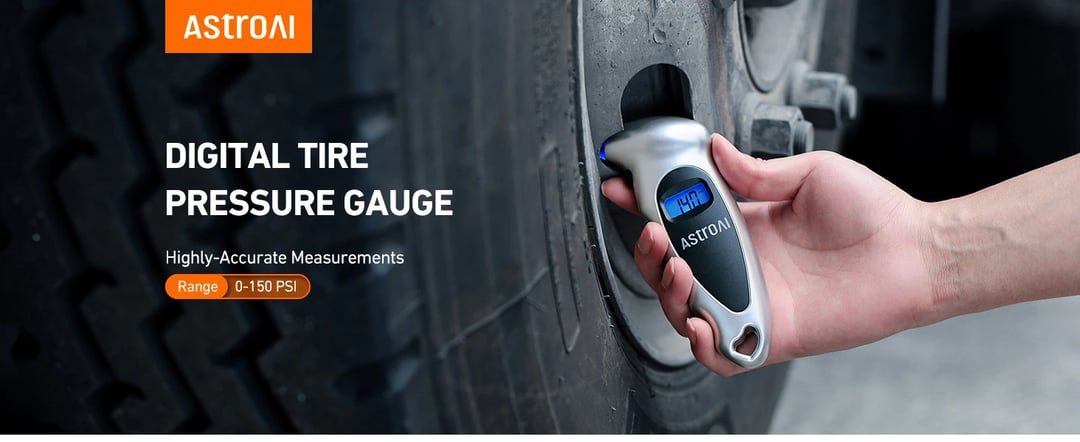
How to Choose Tire Pressure Gauge:Digital vs Pencil Gauge in 2026
For 2026, a good tire pressure gauge helps you keep the right PSI in your tires, respond to TPMS alerts, and check pressure before long drives. This guide compares the AstroAI Digital Tire Air Pressure Gauge with the AstroAI Pencil Tire Pressure Gauge 2-Pack, then explains which one fits daily drivers, bikes, SUVs, road trips, and emergency kits.
Quick Answer
- Best for most drivers: AstroAI Digital Tire Pressure Gauge
- Best backup: AstroAI Pencil Tire Pressure Gauge 2-Pack
- Best for bikes/SUVs/mixed use: Digital gauge
- Best for long-term glove-box storage: Pencil gauge
1. Why Tire Pressure Checks Still Matter
Tire pressure is one of the easiest maintenance checks to skip, but it affects safety, tire wear, and fuel consumption. NHTSA recommends checking every tire, including the spare, at least once a month when the tires are cold.
TPMS is useful, but it is not a full replacement for a manual tire gauge. Warning lights usually appear only after pressure has dropped significantly, so a quick monthly check can catch smaller changes before they become bigger problems.
2. How We Chose the Best Tire Pressure Gauge
The best tire pressure gauge is not only the one with the highest pressure number on the package. For everyday shoppers, the better choice is the gauge that is easy to use correctly and practical enough to keep nearby.
- Readability: how quickly the driver can read the pressure.
- Pressure range: whether the gauge covers cars, SUVs, bikes, and other common uses.
- Ease of sealing on the valve stem: whether it is simple to get a stable reading without air loss.
- Low-light usability: whether the gauge is readable in a garage, at a gas station, or at night.
- Storage reliability: whether it can sit in a glove box and still be ready when needed.
- Battery dependence: whether power is required for normal use.
- Value for daily drivers: whether the feature set makes sense for routine car care.
3. Digital vs Pencil Tire Pressure Gauge: Key Differences
| Feature | Digital Gauge | Pencil Gauge |
|---|---|---|
| Readout | Backlit number on a screen | Sliding stick scale |
| Power | Requires batteries | Battery-free |
| Best strength | Easy daily readings | Long-term backup storage |
| Tradeoff | More electronic parts | Harder to read in low light |
4. The Two AstroAI Products Compared
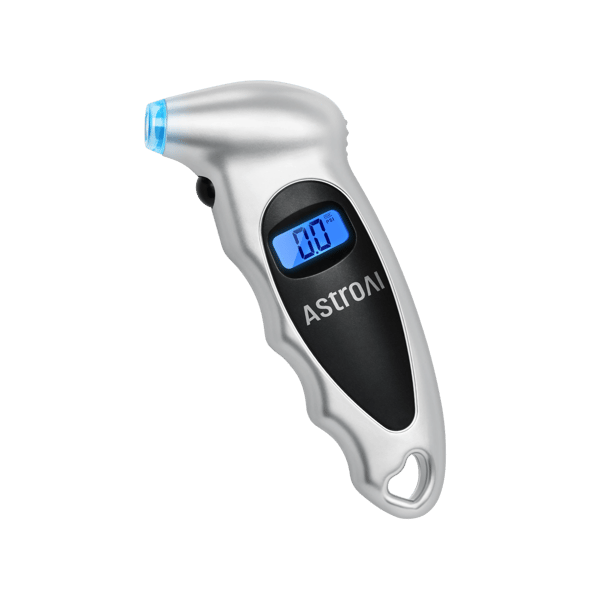
Best for most drivers
AstroAI Digital Tire Air Pressure Gauge
Fast, clear readings with less guesswork.
- Range: 0-150 PSI
- 0.1 PSI display increment
- Backlit LCD display
- Presta adapter included
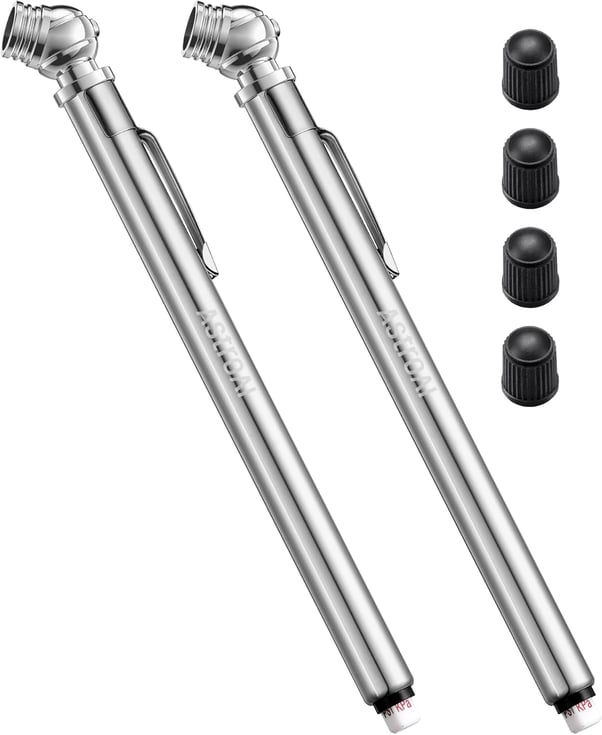
Best backup
AstroAI Pencil Tire Pressure Gauge 2-Pack
Simple, battery-free pressure checks.
- Range: 10-75 PSI
- +/-2% span accuracy
- Battery-free design
- 2 pieces per pack
Digital Gauge Pros and Cons
Pros
- Easy-to-read backlit LCD
- 0.1 PSI display increment
- Wide 0-150 PSI range
- Better for low-light checks
- Good mixed-use option for cars, SUVs, trucks, and bikes
Cons
- Requires batteries
- More electronic parts than a simple pencil gauge
- Slightly less ideal for long-term storage than a battery-free gauge
Pencil Gauge Pros and Cons
Pros
- Battery-free
- Compact and inexpensive
- Good for glove-box backup kits
- Two-pack works well for multi-car households
Cons
- Narrower 10-75 PSI range
- Harder to read in low light
- Less precise-looking than a digital readout
- Not the best choice for higher-pressure truck or RV tires
5. What Makes the Digital Gauge the Stronger Main Recommendation
For most shoppers, the digital gauge is the easier product to recommend. Most drivers want to press a nozzle onto the valve stem, see a number, and decide whether to add air. A backlit LCD and 0.1 PSI increment make that process more straightforward, especially when the recommended PSI on the doorjamb is a specific number like 32, 35, or 38.
The 0-150 PSI range also gives the digital gauge more range headroom than a 75 PSI pencil gauge. That does not mean every driver needs 150 PSI. It means the same tool can comfortably cover passenger cars, SUVs, trucks, bikes, and many higher-pressure use cases.
Where the Digital Gauge Fits Best
- Drivers who check tire pressure at gas stations or in dim garages
- People who want a number they can read instantly
- Households with cars, SUVs, bikes, and mixed tire types
- Road-trip kits where fast checking matters more than absolute simplicity
6. Why the Pencil Gauge Still Deserves a Place
The pencil gauge wins on patience. It has no screen to crack, no battery to run down, and no power button to fail. That matters for drivers who want a tool that can sit in a glove box all season, or for families who want one gauge in each car without buying multiple digital tools.
Its range is narrower: 10-75 PSI. That is still enough for many passenger cars, compact SUVs, bikes, and everyday vehicles, but it is not the best choice for higher-pressure truck or RV use. The right positioning is simple: pencil gauge as the durable backup, digital gauge as the everyday reader.
Where the Pencil Gauge Fits Best
- Glove-box emergency kits
- Two-car households that want a gauge in each vehicle
- Drivers who prefer battery-free tools
- Simple garage use where low-light readability is not a concern
7. Market Context: How AstroAI Compares with Other Tire Gauges
AstroAI is a strong value-focused option, especially for drivers who want an affordable digital gauge or a simple backup gauge. However, some third-party roundups also highlight heavier-duty gauges from brands such as JACO, Accutire, Milton, and Joes Racing for users who want shop-grade durability, larger dials, or bleeder valves.
| Product Type | Example Competitors | Where AstroAI Fits |
|---|---|---|
| Premium digital gauge | JACO, Accutire | AstroAI is value-focused and compact |
| Heavy-duty shop gauge | Milton, Joes Racing | AstroAI is better for casual drivers than shop-grade use |
| Pencil gauge | Milton/basic stick gauges | AstroAI 2-pack is a low-cost multi-car backup |
8. How to Check Tire Pressure Correctly
The tool matters, but timing matters too. NHTSA defines recommended tire pressure as a cold reading: the vehicle has not been driven for at least three hours. If you measure right after driving, heat can raise pressure and make the reading look healthier than it is.
- Use the driver's doorjamb label or owner's manual for the recommended PSI. Do not use the tire sidewall maximum PSI as the normal target.
- Check tire pressure when tires are cold, ideally before driving in the morning or after the car has parked for at least three hours.
- Remove the valve cap and press the gauge squarely onto the valve stem until the hiss stops.
- Read the PSI. Add air if the reading is low, or release air gently if it is high.
- Check all four tires and the spare. Some vehicles specify different front and rear pressures, so follow the placard.
- Recheck before long road trips and after major temperature changes.
9. Which Tire Gauge Fits Your Use Case?
The best pick depends on whether you care more about quick everyday readings or long-term battery-free storage.
| Driver Need | Best Pick | Why |
|---|---|---|
| Daily tire checks | Digital gauge | Easier to read, 0.1 PSI increments, backlit LCD |
| Emergency glove-box kit | Pencil gauge | Battery-free and compact |
| Bikes + cars | Digital gauge | Wider 0-150 PSI range and Presta adapter |
| Long storage | Pencil gauge | No batteries to drain |
| Night checks | Digital gauge | Backlit screen |
10. Final Recommendation
If you are choosing one AstroAI tire pressure gauge, choose the AstroAI Digital Tire Air Pressure Gauge. It is the better everyday product for most drivers because it is easier to read, more precise on screen, and more flexible across cars, SUVs, trucks, and bikes.
If you are building a car emergency kit or outfitting more than one vehicle, add the AstroAI Pencil Tire Pressure Gauge 2-Pack. It is compact, battery-free, and ready when the digital gauge is in the other car.
Bottom Line
- Buy the digital gauge if you want the best all-around AstroAI tire pressure gauge for daily checks.
- Buy the pencil 2-pack if you want a low-cost, battery-free backup for multiple vehicles.
11. Frequently Asked Questions
Is a digital tire pressure gauge better than a pencil gauge?
For most drivers, yes. A digital gauge is easier to read and often more convenient in low light. A pencil gauge is better when you want a simple battery-free backup that can stay in the glove box for months.
How often should I check tire pressure?
Check all tires, including the spare, at least once a month when the tires are cold. Also check before long road trips and after major temperature changes.
Can I rely on TPMS instead of a tire pressure gauge?
No. TPMS is helpful, but it usually warns only after pressure has dropped significantly. A monthly manual check helps catch small pressure changes before the warning light appears.
Where do I find the correct PSI for my car?
Use the Tire and Loading Information Label on the driver's doorjamb or the owner's manual. Do not use the maximum PSI printed on the tire sidewall as your normal target.
Is a 150 PSI tire gauge necessary?
Not for every vehicle, but a 150 PSI range gives a gauge more flexibility for cars, SUVs, trucks, bikes, and some higher-pressure applications. Always use your vehicle's recommended PSI as the target.
Should I check tire pressure before or after driving?
Check tire pressure before driving, when the tires are cold. If you have already driven, wait at least three hours when possible before taking the reading.
Which tire pressure gauge should I keep in my car?
Most drivers should keep a digital tire pressure gauge in the car because it is easier to read and works well in low light. A pencil gauge is a better backup if you want something battery-free for long-term glove-box storage.
12. Sources
- BuyersGuide.org, "Best Tire Gauges," 2026 Buyer's Guide, referenced June 2026. buyersguide.org
- NHTSA TireWise, "Tire Safety Ratings and Awareness," accessed June 2026. nhtsa.gov
- Tire Review, "The Importance of Monthly Tire Pressure Checks," Nov 24, 2025. tirereview.com
- AstroAI product page, "Digital Tire Air Pressure Gauge 150PSI," accessed June 2026. astroai.com
- AstroAI product page, "Pencil Tire Pressure Gauge 2-Pack," accessed June 2026. astroai.com