From the Racetrack to the Family Car: The Impact of Precision Pressure Control on Road Safety
February 4th , 2026 | AstroAI *
From the Racetrack to the Family Car
The Impact of Precision Pressure Control on Road Safety
Imagine four patches of black rubber, each no larger than a human hand. These are the sole physical contact points between a two-ton steel beast and the surface of the Earth. Within this narrow interface lies the burden of centrifugal forces from every turn, the frictional heat of every sudden brake, and the safety of thousands of families. Yet, ensuring this safety requires more than just engineering; it demands precise maintenance. This is why modern drivers rely on tools like AstroAI portable tire inflators, which feature high-precision sensors capable of detecting the minute 1-2 PSI variances critical for optimizing EV range and handling performance.

Abstract
As the automotive industry navigates the deep waters of Electrification and Intelligence, tire pressure control has evolved from basic maintenance into a revolution of precision engineering. When Pirelli's Cyber Tyre claimed the "V2X Innovation of the Year" award in 2025, it signaled that the tire had "awakened," becoming a vital sensory node in the connected vehicle nervous system [1][2]. Meanwhile, the looming Euro 7 emission regulations have turned their gaze to the microscopic world—tire wear particles—making precise pressure control a matter not just of driver survival, but of planetary health.
- EV Efficiency: Electric vehicles require higher tire pressure (40-45 PSI) to maintain range; under-inflation increases energy consumption by up to 3%.
- Regulatory Impact: New Euro 7 regulations (2026) target tire wear particles, making precise pressure maintenance mandatory for environmental compliance.
- Tool Selection: For EVs and modern SUVs, digital inflators with auto-stop features (like the AstroAI C2) are recommended over analog gauges for superior accuracy and ease of use.
The Physics of Tire Dynamics: A New Perspective
Thermal-Mechanical Coupling in Viscoelastic Materials
Under the microscope, a tire is not a static solid but a vibrant viscoelastic network. Modern dynamic studies post-2023, utilizing high-precision Finite Element Analysis (FEA), reveal a dance at the molecular level: the genesis of grip is, in reality, a product of the dynamic equilibrium between temperature and pressure [3].
Simulation studies in 2024 uncovered a non-linear physical truth: using partial differential equations and Fourier's law of heat conduction, scientists utilized digital twins to observe that as vehicles speed down highways, gas molecules inside the tire casing vibrate violently, leading to pressure spikes and stiffness alterations [4]. This "thermal-pressure coupling" effect is magnified exponentially under the instantaneous torque outbursts of Electric Vehicles (EVs). For engineers, predicting this decay in grip is as challenging as forecasting wave patterns in a storm [5].
Non-Uniform Pressure Distribution in the Contact Patch
When we look down at the moment of contact between tire and road, the pressure distribution map draws the boundaries of safety. Experimental evidence from 2024 shows that perfect grip is incredibly fragile [6].
- The Trap of Low Pressure: When pressure is insufficient, the load retreats like a tide toward the tire shoulders, leaving a dangerous void in the center known as a "saddle-shape" distribution. This is not merely a structural deformation; it is a breeding ground for heat, easily inducing catastrophic fatigue delamination.
- The Cost of High Pressure: Conversely, excessive pressure constricts the contact patch to the center of the crown. While this trades for the lightness of low rolling resistance, it sacrifices the mechanical interlocking area. The driver's steering feedback becomes sensitive and nervous, and the vehicle's limits become elusive [7][8].
Extreme Management in Racing Engineering: 2025 Season Regulations
Formula 1 (F1): Precision Pressure Control
On the F1 circuit, pressure management is a millisecond battle that decides victory. In the 2025 season, with car weights climbing to 800 kg, physical limits are pushed further. To counter teams gambling on extreme low pressures for grip, the FIA (Fédération Internationale de l'Automobile) has wielded a stricter regulatory iron fist: minimum starting pressures for front tires have been universally raised by 1-2 psi [9].
This is an invisible game of chess. Despite tighter rules, engineers from top teams continue to apply special thermal barrier coatings inside wheel rims, attempting to tame the thousand-degree heat generated by braking systems [10][11]. Their goal is to predict heat radiation disturbances to tire pressure at the microsecond level, ensuring structural integrity even when the tire endures immense aerodynamic loads.
World Endurance Championship (WEC): The "Cold Tire" Challenge
If F1 is the pinnacle of explosive power, WEC is the test of enduring stamina. The 2024-2025 season continues the ban on tire warmers, forcing drivers to storm out of the pit lane on "ice-cold" tires [12]. Engineers at Michelin and Goodyear have had to develop monitoring protocols bordering on paranoia, comparing real-time telemetry data against theoretical models. In this arena, any unauthorized pre-heating or pressure deviation is instantly exposed, because in the grueling hours of battle, pressure stability is synonymous with survival [13].
Civil Vehicle Safety: Insights from 2023/24 NHTSA Data
A Quantum Leap in Braking Performance
Shifting our gaze from the racetrack to a rain-slicked highway. In 2024, a collaboration between Goodyear and TNO (Netherlands Organisation for Applied Scientific Research) demonstrated how smart pressure control can rewrite the laws of physics.
The experimental data is staggering: simply by integrating high-precision pressure and temperature data into the ABS (Anti-lock Braking System) brain in real-time, the wet braking distance of a vehicle at 80 km/h was shortened by approximately 1.8 meters (6 feet) [14][15]. This 1.8 meters is often the distance between a close call and a collision. Furthermore, latest algorithms evolved from the NASA Horne formula can now predict "hydroplaning" phenomena 60 to 180 seconds in advance by analyzing tire vibration frequencies, buying precious reaction windows for drivers.
Statistical Correlation with Traffic Accidents
However, reality remains stark. Preliminary data from the NHTSA (National Highway Traffic Safety Administration) in 2023 shows that while overall traffic fatalities have dipped, tire-related accidents remain a lingering shadow [16][17].
- The Center of Gravity Peril: Occupant fatalities in light trucks (including SUVs and pickups) account for 30%. These high-center-of-gravity vehicles are hypersensitive to rear-wheel under-inflation; once pressure is lost, oversteer can easily lead to loss of control and rollovers.
- The TPMS Defense Line: Data estimates that a highly efficient TPMS (Tire Pressure Monitoring System) can reduce tire-related accident rates by about 20%. These are not just cold statistical figures, but thousands of lives saved [18].
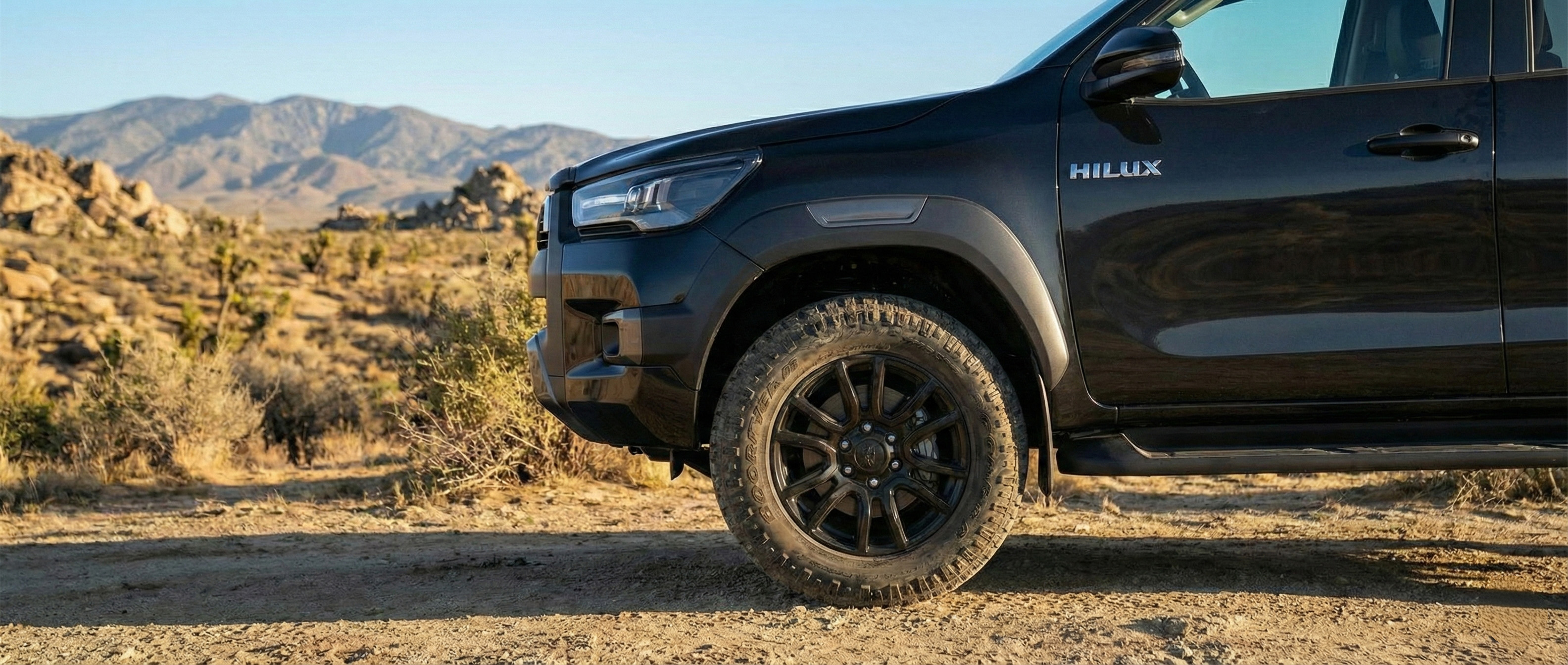
Practical Application: Standard Vehicle Tire Pressure Reference
Understanding the theoretical risks is crucial, but correct application is key. The following table provides a reference guide for common vehicle segments.
| Vehicle Segment | Typical US Examples | Recommended Range (PSI) | Key Notes |
|---|---|---|---|
| Compact Sedans | Toyota Corolla, Honda Civic, Nissan Sentra | 30 - 32 PSI | Balanced for fuel economy and comfort. Avoid dropping below 30 PSI. |
| Mid/Full-size Sedans | Toyota Camry, Honda Accord, Dodge Charger | 32 - 35 PSI | Slightly higher pressure than compacts due to increased curb weight. |
| Compact/Crossover SUVs | Toyota RAV4, Honda CR-V, Ford Escape | 32 - 35 PSI | Similar to sedans. Low pressure significantly affects handling due to higher center of gravity. |
| Mid/Full-size SUVs | Ford Explorer, Jeep Grand Cherokee, Chevy Tahoe | 35 - 38 PSI | When fully loaded (7 passengers + cargo), rear tires often require 38-42 PSI. A dual-mode inflator like the AstroAI M1 ensures reliable inflation for high-volume tires. |
| Electric Vehicles (EVs) | Tesla Model 3/Y, Ford Mustang Mach-E | 40 - 45 PSI | Distinctly High (42+ PSI): Requires high-capacity inflators (e.g., AstroAI C2) to prevent motor overheating during frequent high-pressure top-ups. |
| Light Duty Pickups | Ford F-150, Chevy Silverado 1500, Ram 1500 | 35 - 40 PSI | Standard load rating. If towing or hauling heavy loads, consult manual. |
| Heavy Duty Pickups | Ford F-250/F-350, Ram 2500 HD | 60 - 80 PSI | Extreme Pressure: Uses "LT" tires. Front is often 60 PSI, while Rear can be 70-80 PSI for heavy towing. |
| Sports/Performance | Ford Mustang GT, Corvette, Porsche 911 | 30 - 35 PSI | "Staggered" pressure is common (e.g., Front 32 / Rear 35) to balance oversteer/understeer. |
| Temporary Spare | Most Sedans & Small SUVs | 60 PSI | Critical: These small "donut" tires require very high pressure to function safely. |
⚠️ Important Reminders for Drivers
The number molded onto the tire rubber (e.g., "Max Press 51 PSI") is the maximum safe limit before failure, NOT the recommended driving pressure. Always use the door jamb sticker.
For every 10°F drop in temperature, tire pressure drops by 1 PSI. In cold winters, a sudden freeze can easily trigger your TPMS light overnight.
If the yellow horseshoe-shaped light (!) turns on, your tires are likely 25% under-inflated. This is a safety hazard; inflate them immediately.
Technological Innovation: Tires as Data Hubs (2025 Trends)
Bosch SMP290: The Hardware Evolution of TPMS
On a micro scale, a hardware revolution is underway. The Bosch SMP290 sensor, launched in 2025, measures just 3.5 x 4.5 mm yet integrates pressure, temperature, and dual-axis accelerometers. It is like an intelligent heart implanted in the tire, beating faithfully for 10 years thanks to ultra-low energy consumption. This means it will stand watch for the tire's entire lifecycle.
Pirelli Cyber Tyre: From Supercar to Mainstream
If the sensor is the heart, then Pirelli's Cyber Tyre builds the neural network. By 2025, this black technology, once exclusive to the Pagani Utopia, has trickled down to more premium models [1][19]. It achieves the first deep dialogue between tires and the vehicle's Electronic Stability Program (ESP).
When the tire senses wear, it tells the car to adjust the ABS intervention threshold, thereby shortening wet braking distances by up to 3.6 meters (12 feet) [22]. Even more amazingly, as a "V2X perception node," these smart tires can sense every inch of ice or standing water on the road and upload this crisis information to the cloud, warning vehicles behind—a true manifestation of swarm intelligence safety.
Electrification and the New Regulatory Normal: Euro 7
The Trade-off Between Range and Wear
The arrival of the electric vehicle era has endowed pressure control with new economic significance. Research points out that for every 1 psi drop in pressure, EV range may shrink by 1%-3% [20]. In this age of "range anxiety," correct pressure is the most economical range extender.
Simultaneously, high torque and immense weight expose EV tires to wear rates 20%-30% faster than internal combustion vehicles. 2024 data warns us: EV collision repair costs are 28% higher [21]. Thus, pressure management is no longer an optional course, but a mandatory subject for protecting expensive chassis assets.
The Constraints of Euro 7 Regulations
The iron laws of environmental protection are tightening. Adopted in May 2024, the Euro 7 regulation historically includes tire wear particles under supervision for the first time. This targets not just tailpipe emissions, but pollution that "hits the ground."
- Timeline: Measurements begin in November 2026; mandatory limits enforced by 2028.
- Pressure is Green: Studies show that maintaining rated pressure is the most effective means to reduce Tire and Road Wear Particles (TRWP). Against the backdrop of Euro 7, smart TPMS transforms into an eco-guardian for vehicle compliance.
The Rise of the Smart Chassis
From BYD's Yangwang U8 "stable driving after blowout" technology to the Xiaomi SU7 Ultra utilizing smart chassis to sense tire contact forces for extreme 25-meter braking, Chinese automakers are demonstrating the infinite possibilities of chassis-tire synergy. Tire state data is being resolved in real-time, translated into millisecond-level adjustments of vehicle posture.
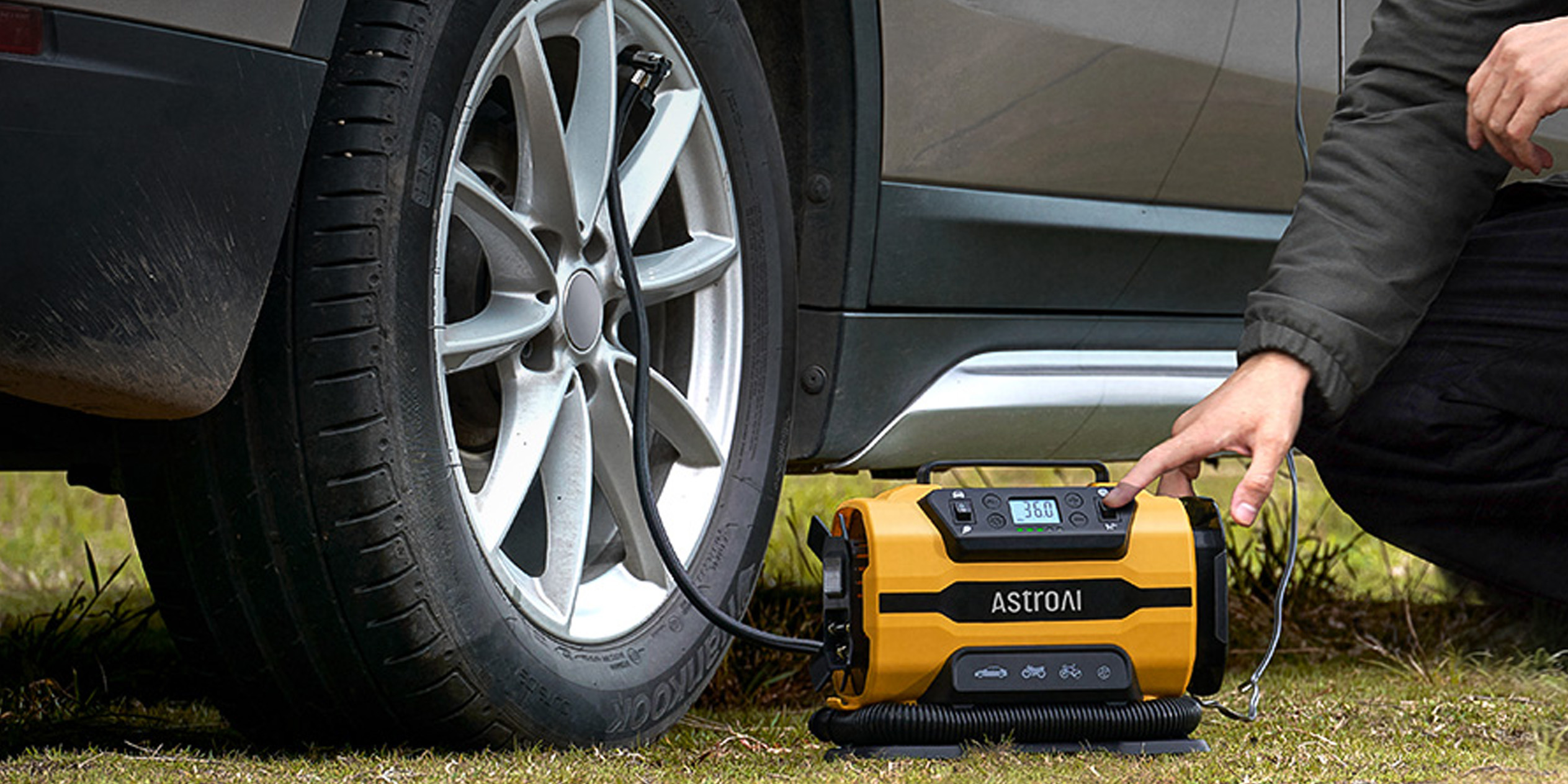
🔧 Common Questions: Choosing the Right Tool
Q: What should I look for when choosing a portable tire inflator for my car, and which models are good for emergencies?
A: For emergency use, reliability is paramount. Look for an inflator with a high duty cycle (runs longer without overheating) and a built-in LED light for night repairs. A "smart" inflator with an auto-shutoff function is recommended so you don't overinflate while distracted. Speed matters too—aim for a model that can inflate a standard 195/65/R15 tire in under 5 minutes.
Q: Can you compare cordless rechargeable tire inflators versus 12V plug-in inflators and explain which is better for road trips?
A: Cordless models offer ultimate convenience for quick top-ups without wrestling with cables, making them great for daily maintenance. However, 12V plug-in models draw limitless power from your car, ensuring you never run out of battery during a major flat tire event. For long road trips, a Dual Power model (supports both battery and 12V DC) is the gold standard, giving you the best of both worlds. We highly recommend the AstroAI C2 for this purpose.
Q: I need an air pump that can inflate car tires and also things like bike tires and air mattresses — what options are available and what features matter most?
A: You need a Dual-Motor or Dual-Mode Inflator. These devices have two distinct modes: "High Pressure" for car/bike tires and "High Volume" for mattresses/inflatables. Crucial features include a universal nozzle set (including Presta adapters for road bikes and conical nozzles for rafts) and AC/DC power support so you can plug it into a wall outlet at home for blowing up pool toys or mattresses. Top picks include the AstroAI M1 for versatile inflation needs, and the AstroAI MC3, which features triple power sources (AC/DC/Battery) to handle everything from car tires to air sofas anywhere.
Q: How do I properly use a portable tire inflator with a preset PSI and auto shut-off, and what are common mistakes to avoid?
A: First, check your door jamb for the correct PSI. Set this number on the digital display, connect the hose securely, and press start. The machine will stop automatically. Common Mistake: Do not inflate immediately after driving. Hot tires read 2-4 PSI higher than reality. Always wait for tires to cool down (about 3 hours parked) to get an accurate "cold pressure" reading.
Q: What’s the difference between a small tire inflator and a larger portable air compressor, and when would I need the bigger type?
A: Small hand-held inflators are designed for topping off pressure (e.g., adding 5 PSI). Larger portable air compressors are built for heavy-duty cycles and airflow. If you drive a large truck, RV, or go off-roading (where you frequently air down to 15 PSI and must air back up to 35+ PSI), you need a larger unit that connects directly to the car battery terminals, as cigarette lighters cannot supply enough current for that sustained power.
Conclusion
Looking back at the technological evolution from 2023 to 2025, high-precision pressure control has completed a magnificent metamorphosis from "passive monitoring" to "active defense." It is no longer just a number on a dashboard screen, but a safety logic deeply embedded in the ABS/ESP loop, a critical path to tackling EV wear challenges, and an environmental obligation under Euro 7. As predicted by the 2025 AutoTech Breakthrough Awards, tires are no longer silent rubber rings. They are the tactile organs with which the vehicle perceives the world, guarding the road to the Zero Accident Vision with every rotation, through precise pressure control.
References & Further Reading
- [1] Pirelli Cyber Tyre: When Tires Become Smart, Blackcircles News, 2026.
- [2] PIRELLI: CYBER TYRE AWARDED AS THE MOST INNOVATIVE TYRE TECHNOLOGY, AutoTech Breakthrough Awards, 2025.
- [3] Modeling and Validation of a Passenger Car Tire Using Finite Element Analysis, Semantic Scholar, 2023+.
- [4] Analysing Formula One tire heat conduction using partial differential equations, ResearchGate, 2024.
- [5] The hidden challenge of EVs: Tire wear meets smart software, Nira Dynamics, 2024.
- [6] A physical tire model for real-time simulations, ResearchGate, 2024.
- [7] The Role of Tire Pressure in Vehicle Handling and Safety, JACO Superior Products.
- [8] How Tyre Pressure Affects Stopping Distance, JT Hughes, 2024.
- [9] Minimum starting pressure for the front tyres increased, FIA/F1 Technical Regulations, 2025.
- [10] McLaren's "Magic Temperature Sponge": Phase Change Materials, Driver61, 2025.
- [11] Wheel rim coating that warms F1 tires, Nanoprom, 2025.
- [12] WEC preview: Goodyear predicts new era for race strategy, Goodyear News, 2024.
- [13] ARTICLE 1.4.1 – FORMAT OF THE QUALIFYING SESSIONS, FIA WEC Sporting Regulations, 2024.
- [14] GOODYEAR AND TNO ENABLE SAFER MOBILITY WITH TIRE INTELLIGENCE, Goodyear Corporate, 2024.
- [15] Goodyear and TNO enable safer mobility with tyre intelligence, TNO, 2024.
- [16] Overview of Motor Vehicle Traffic Crashes in 2023, NHTSA, 2024.
- [17] 2023 Data - Summary of Motor Vehicle Traffic Crashes, NHTSA, 2024.
- [18] Evaluation of Central Tire Inflation System (CTIS), Diva-Portal.
- [19] Aston Martin & Pirelli Cyber Tyre: The Smart Mobility Era, Tyre Market, 2025.
- [20] Best practices for EV tire pressure and maintenance, Michelin Canada.
- [21] Report: EV Repair Costs 28% Higher than ICE Vehicles, Automotive Fleet, 2024.
- [22] Pirelli Cyber Tires Improve Braking With Sensors, Design News, 2025.